The Ultimate Guide to Pool Heating: Swim Comfortably Year-round
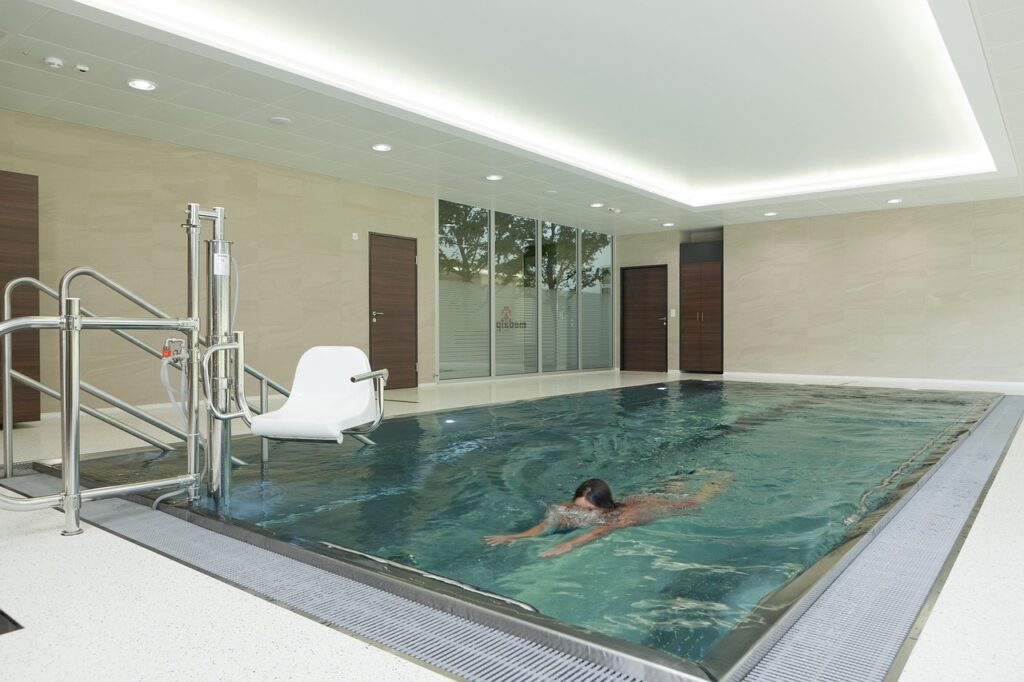
If you’re lucky enough to own a swimming pool, you already know it’s one of the best ways to relax, exercise, and spend quality time with friends and family. But what happens when the water’s too cold to enjoy—especially during those cooler spring or autumn months? That’s where pool heating comes in.
Whether you’re looking to extend your swimming season or simply want a more comfortable dip, a pool heater can transform your experience. In this blog, we’ll cover everything you need to know about heating your pool—from the different types of heaters to choosing the right system for your needs.
Why Heat Your Pool?
While a sunny day might warm your pool a bit, it’s usually not enough to maintain a consistent, comfortable temperature—especially in our cooler months or if your pool is shaded or indoors. Heating your pool offers several benefits:
- Extended Swim Season: Enjoy your pool from early spring to late fall—or even year-round!
- Comfort: Say goodbye to the shock of cold water. A heated pool is ideal for morning swims or evening dips.
- Health & Therapy: Warmer water is easier on muscles and joints, making it perfect for hydrotherapy and low-impact exercise.
- Better Use of Investment: You’ve invested in your pool—why not maximize its usage?
Types of Pool Heaters
Solar Pool Heating
Solar pool heaters use the sun’s energy to heat your pool. Water is pumped through solar panels—usually installed on your roof—where it’s warmed before returning to the pool.
Pros:
- Eco-friendly
- Low operating costs
- Long lifespan
Cons:
- High upfront cost
- Weather dependent
- Slower heating speed
- Will not heat in Winter
Gas Pool Heaters
Gas heaters use natural gas or propane to heat the water quickly. They’re ideal for pools that aren’t used regularly or need rapid heating.
Pros:
- Heats water quickly
- Works in all weather conditions
Cons:
- Higher operational costs
- Less energy-efficient than other options
- LPG not practical for pools as the bottles will need changing too frequently
Electric Heat Pumps
Heat pumps pull heat from the air (even when it’s cool) and transfer it to the pool water. They are a popular choice for consistent heating needs.
Pros:
- Energy-efficient
- Low operating costs
- Long-lasting
Cons:
- Slower to heat
- Less effective in very cold climates
Factors to Consider When Choosing a Pool Heater
When selecting a pool heating system, think about:
- Climate: Your local weather plays a big role. Warmer regions benefit from solar or heat pumps, while colder areas may need gas heaters.
- Pool Size: Larger pools require more powerful systems.
- Will you install a pool blanket?: A blanket on the pool will dramatically affect the size of heater required and the running cost.
- Usage: Do you swim daily, seasonally, or only on weekends? This affects the type and size of the heater you need.
- Budget: Don’t just look at the upfront cost—consider long-term energy and maintenance expenses too.
- Environmental Impact: If sustainability matters to you, solar and heat pumps are the most eco-friendly options.
Tips for Efficient Pool Heating
- Use a pool cover: Prevent heat loss, especially overnight.
- Regular maintenance: Keep your heater in top shape with routine servicing.
- Optimize heating schedules: Only heat the pool when you plan to use it.
- Install windbreaks: Fences or shrubs can reduce heat loss from wind exposure.
Final Thoughts
A heated pool isn’t just a luxury—it’s a smart way to get more enjoyment from your outdoor space. Whether you choose a solar heater for its eco-friendly benefits, a gas heater for rapid warmth, or a heat pump for efficiency, there’s a solution that fits your needs and budget.
Ready to take the plunge into a warmer, more inviting pool? Talk to our GC Pool Pros team and find out what heating option works best for your setup. Your perfect swim temperature is just around the corner!
The Bucket Test: How to determine if you might have a leak in your pool
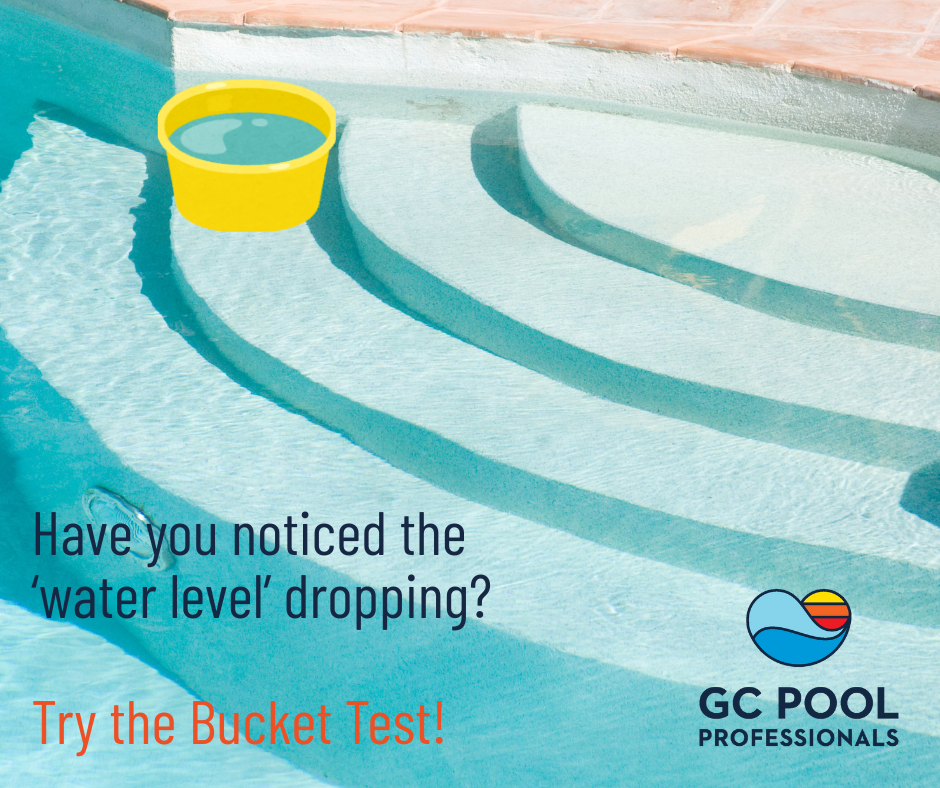
Summer is fast approaching and we are receiving a lot of calls from customers who think they might have a leak. If you are concerned about the water level here is a simple way to determine if your water loss is evaporation or a possible leak.
If you have noticed the water level in your pool dropping more than expected you can perform this simple Bucket Test to potentially rule out a leak in your pool.
✅ Fill a bucket to 50mm from the top
✅ Sit the bucket on the top step of the pool (this keeps the water temperature in the bucket similar to the pool)
✅ Use a pen or a piece of tape to mark the water level in the bucket
✅ At the same time, mark the water level of the pool
✅ Over 24-48 hours, measure the water loss from the bucket and the pool
✅ If the loss from each is the same, it is likely evaporation. If the pool drops considerably more than the bucket, it may be leaking and further investigation is required.
Call us on today on 07 5666 7122 if you require some assistance.
Guide to lowering the water level in your pool!

It is important to note that every pool and filtration system is different and this guide will not be applicable to all. GC Pool Professionals accepts no responsibility for damage you may cause by attempting to operate your pool equipment.
Some pools will have an overflow pipe at the top either under the coping or in the skimmer box. The water level in these pools may still get high in very heavy rain, but it should drain back to its normal level in time. If your pool does not have an overflow and you need to lower the water level due to excessive rain, the following will hopefully help.
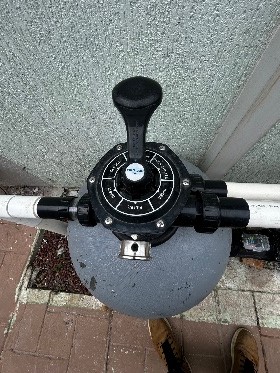
Sand Filters
If you have a Sand Filter, the most important thing to remember is to NEVER TURN THE HANDLE WHILE THE PUMP IS RUNNING.
- Turn the pump off using the switch on your chlorinator, or at the power point
- The handle on the Multi Port Valve (sits on top of the filter) will be in the “Filter” position. Press this down and turn it 180 degrees to the “Backwash Position”
- Turn the pump back on to start pumping water down the drain. Some systems will have an auto shut off after 5 minutes. You may need to turn these off and on again to restart the pump.
- When the water is down to your desired level, turn the pump off again. Make sure you do not take too much water out of the pool, or your pump will suck air, and you’ll waste chemicals.
- Now turn the handle on the Multi Port Valve to the “Rinse” position
- Turn the pump back on for about 30 seconds. This ensure you don’t get cloudy water going back to your pool.
- Turn the pump off again
- Turn the Muli Port Valve handle back to the original “Filter” position.
- Check you have set your timer and chlorinator switch back to the original settings.
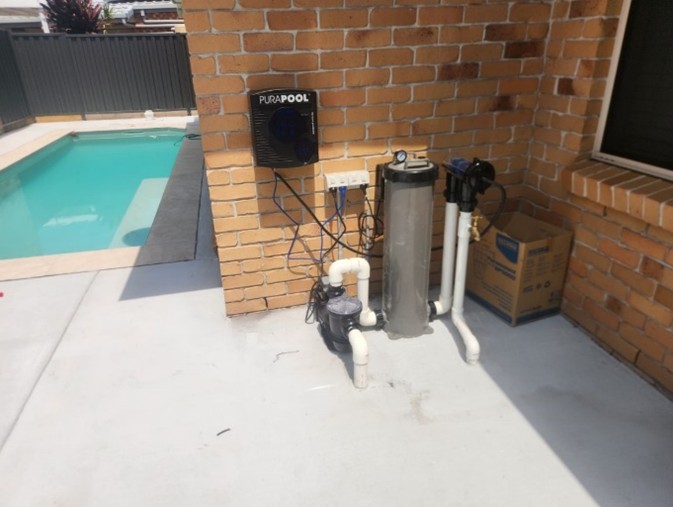
Cartridge Filters
- You will only be able lower your water level if a waste line has been installed on your cartridge filter. This is usually a three-way valve or a tap and is commonly installed between the pump and filter. Not all cartridge filters will have a waste line
- Turn the pump off at the chlorinator or power point
- Take note of the current valve configuration for future reference
- Turn the valve or open the tap to direct the water down the waste line
- Turn the pump back on. Make sure the water is going where you expected it too. If the pump makes an unusual straining noise, turn it off immediately as you may have the valve in the wrong position and blocking flow from the pump
- When the water is down to your desired level, turn the pump back off. Make sure you do not take too much water out of the pool, or your pump will suck air, and you’ll waste chemicals.
- Revert the valves back to their original positions
- Turn the pump back on and check the timer and switches are set correctly.